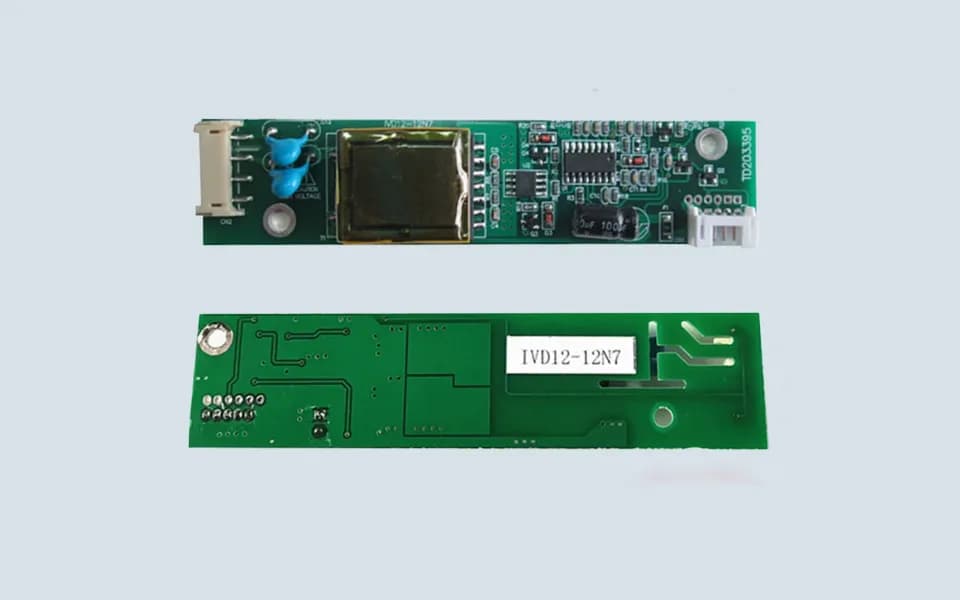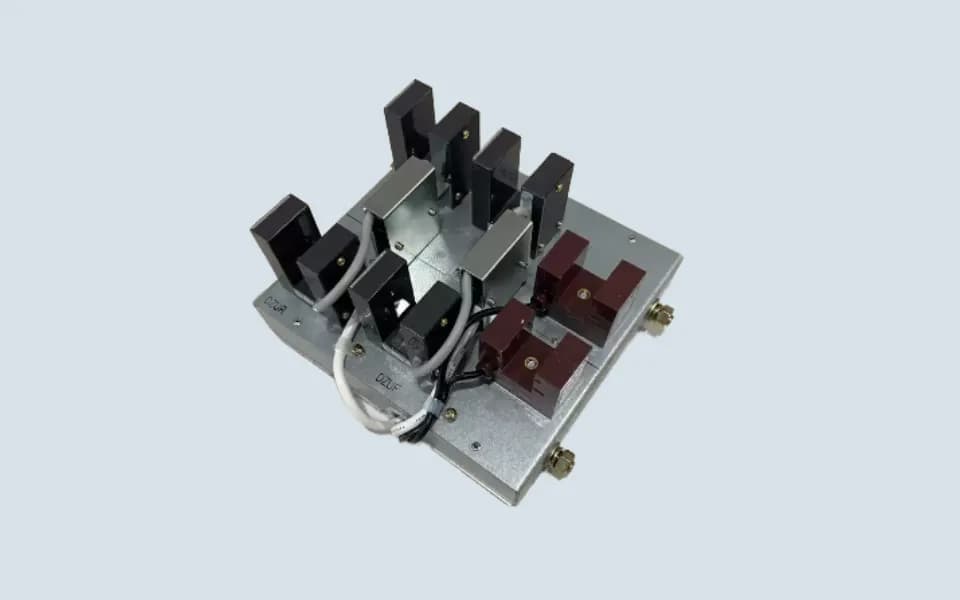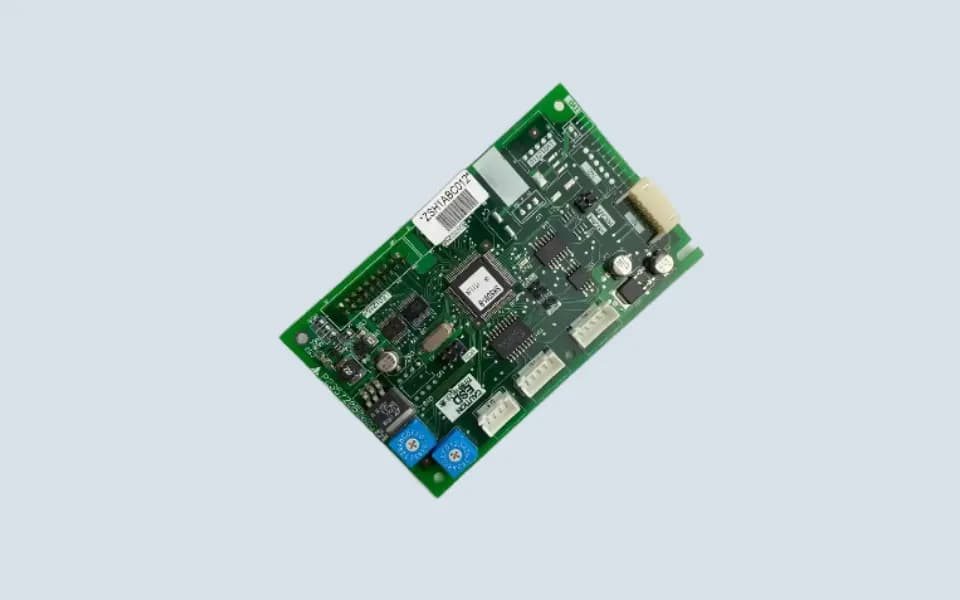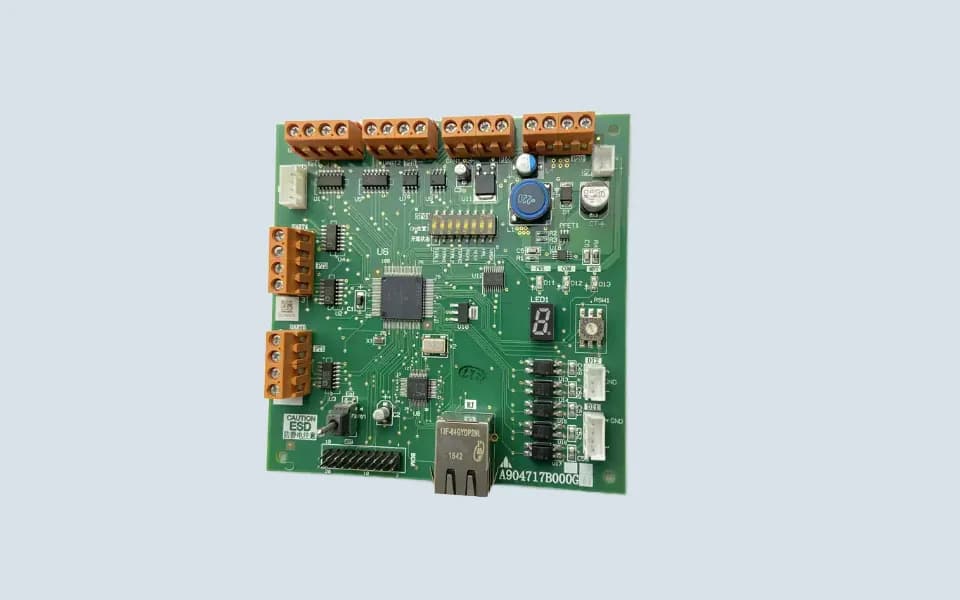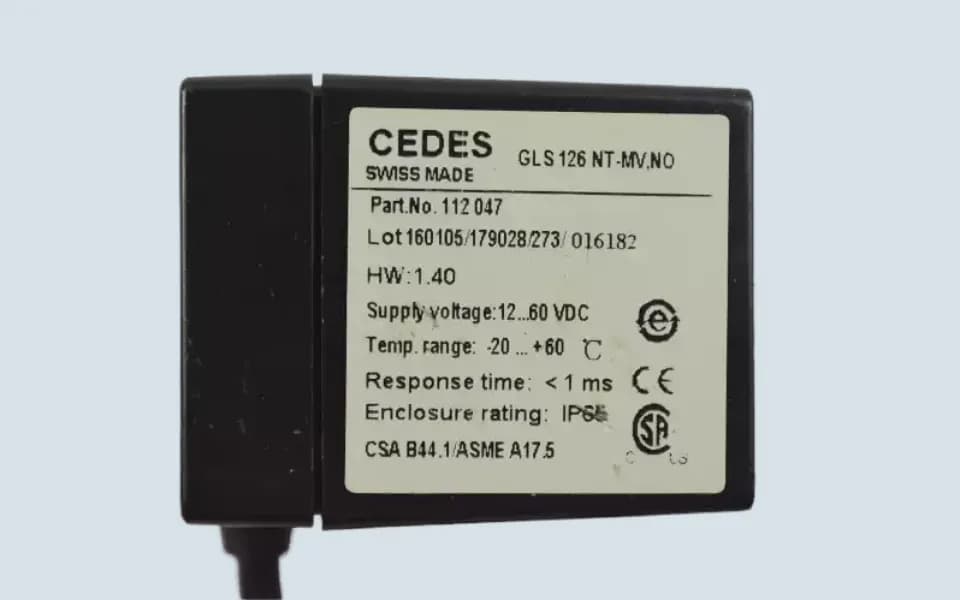
CEDES GLS 126 NT-MV (NO) Mitsubishi Elevator Leveling Sensor / Photoelectric Switch
Please add the quotation and send it to us and get in touch with us immediately
- Global service 24/7
- Lowest price for all products
- Best quality with Production Process
- After-Sale Warranty
- Technical Support
Description
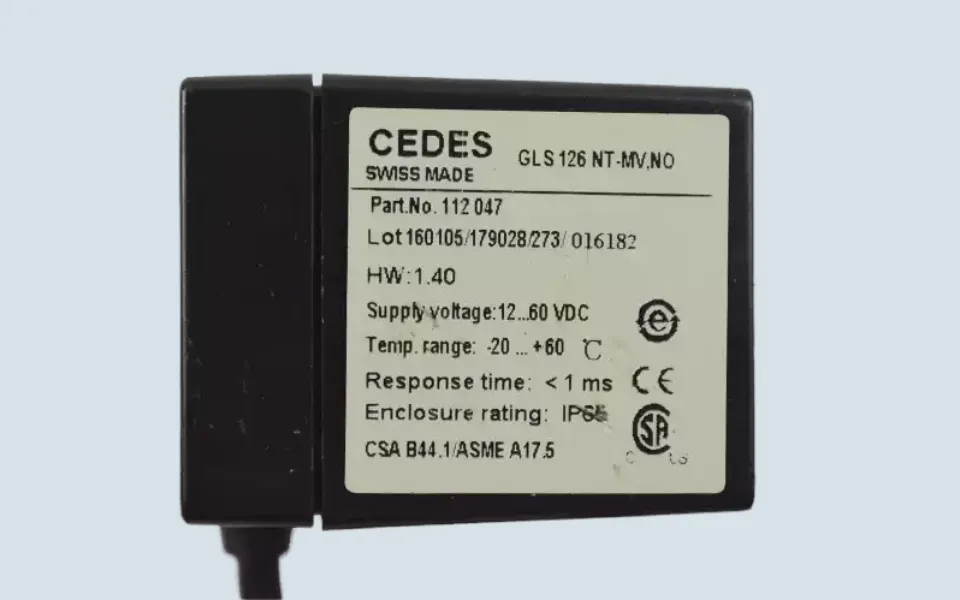
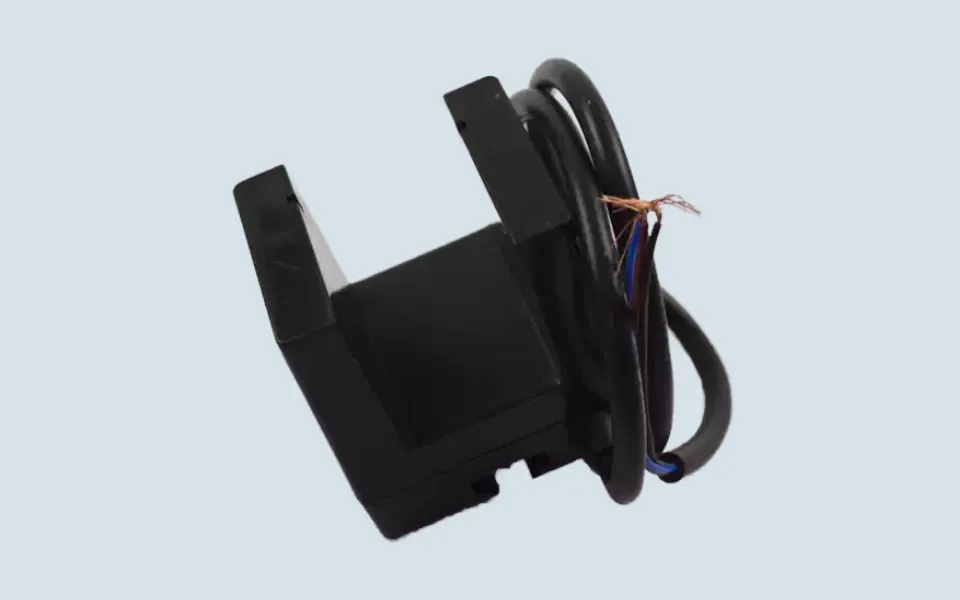
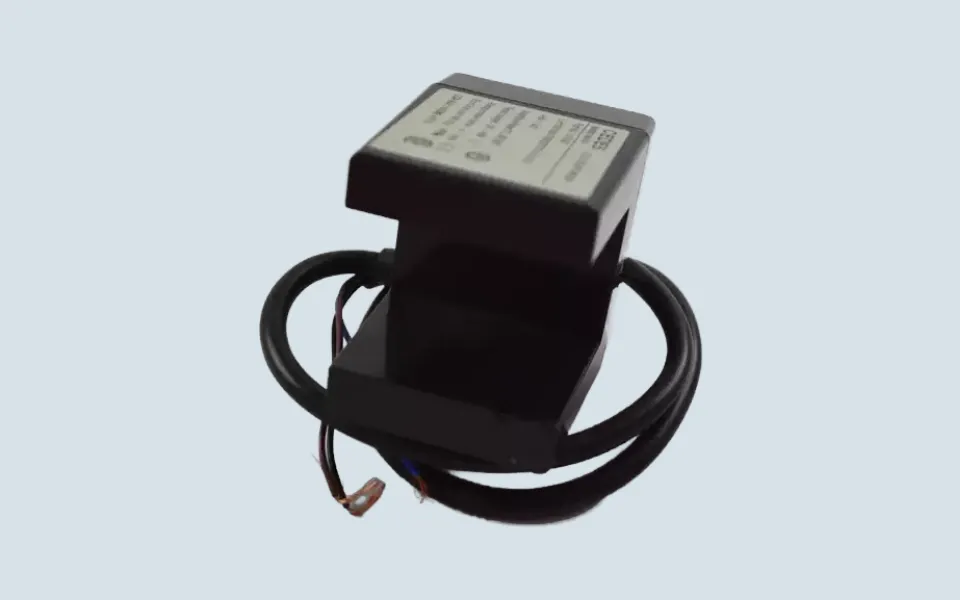
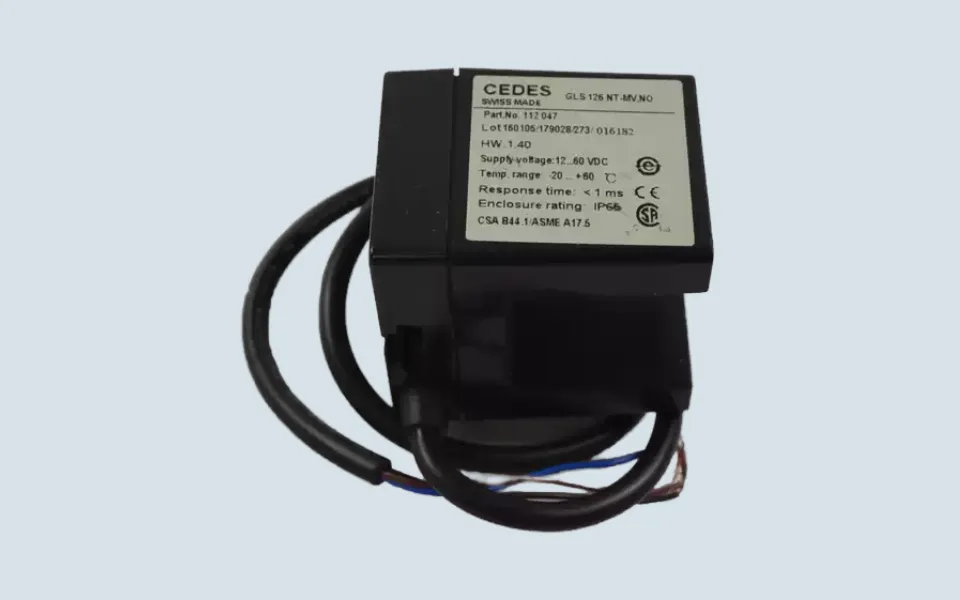
Mitsubishi Elevator Leveling Sensor / Photoelectric Switch — CEDES GLS 126 NT-MV (NO)
CEDES GLS 126 NT-MV (NO) is a photoelectric leveling sensor commonly used in Mitsubishi elevator positioning and leveling systems.
Designed as a slot-type optical sensor, it provides highly accurate position detection during elevator travel and stopping operations. The GLS 126 series is widely used for elevator positioning applications and offers repeatability down to approximately 0.5 mm.
It is commonly associated with:
- elevator leveling systems
- floor positioning control
- re-leveling functions
- door zone monitoring
- controller positioning signals
- CEDES GLS 126 NT-MV
- GLS126 NO
- GLS126 NT-MV (NO)
- GLS126 Series
Common Field Situation
Passengers often notice leveling problems before maintenance teams do.
Typical symptoms may include:
- the car stops slightly above or below floor level
- re-leveling occurs repeatedly after stopping
- door opening is delayed
- floor accuracy changes intermittently
- landing comfort becomes inconsistent
In many Mitsubishi systems, technicians inspect the leveling sensor whenever stopping precision begins to deteriorate.
Why Accurate Leveling Matters
Modern elevators rely on precise floor positioning to ensure:
- smooth passenger entry and exit
- accurate floor alignment
- reliable door zone operation
- reduced mechanical wear
- improved ride comfort
The GLS 126 NT-MV is specifically designed for elevator positioning applications and features a sealed housing with strong resistance to dust and contamination.
Because of this, the sensor is widely used in environments where long-term positioning stability is important.
System Relationship
The leveling sensor typically works together with:
- leveling relays
- controller boards
- door zone circuits
- re-leveling systems
- floor positioning modules
If the positioning signal becomes unstable, the elevator may still run normally while showing reduced stopping accuracy.
This is why technicians often check the sensor circuit before replacing major controller components.
Practical Maintenance Notes
In modernization projects, maintenance teams may inspect:
- sensor alignment
- mounting brackets
- signal wiring
- positioning magnets or flags
- controller input circuits
Improper installation distance or contamination around the optical slot may affect signal consistency over time.
FAQ
Why does an elevator stop slightly above the floor level?
In some systems, inaccurate positioning signals or sensor alignment issues may affect leveling precision.
Can a leveling sensor affect door operation?
Yes. Many elevators use leveling information to confirm safe door opening zones and floor alignment.
Why are CEDES leveling sensors widely used?
Because they provide highly repeatable positioning performance and are designed to operate reliably in dusty elevator environments.
Installation Notes
Before replacement:
- verify the sensor model and output type
- confirm NO (Normally Open) configuration
- check mounting alignment carefully
- inspect wiring and connector condition
- verify signal response during test operation
Some Mitsubishi elevator generations use different leveling architectures even when similar-looking sensors are installed.